AI Research
AI-driven molecular generation using learned latent representations. From chemical data to new compounds through deep generative modeling.
Latency
12ms
Uptime
99.9%
Machine Learning.
Generative Models.
AI Research.
Medical.
IEEE Publication.
Mission Briefing
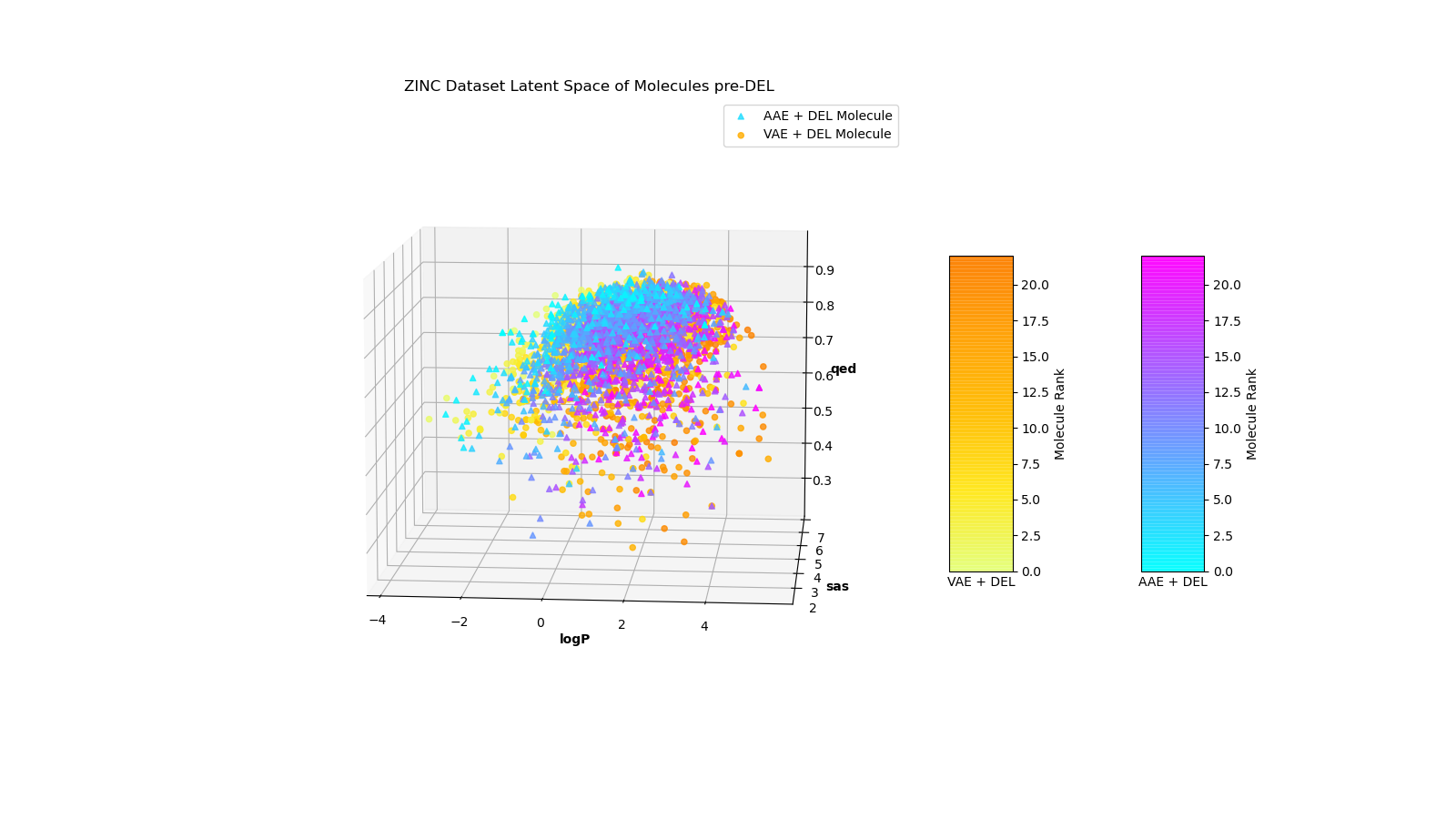
This project was designed to explore generative modeling for chemical compounds by combining an Adversarial Autoencoder (AAE) with a Deep Evolutionary Learning (DEL) approach. The model learns a structured latent space from molecular data, which is then refined through evolutionary techniques to generate new compounds with desirable properties. Built entirely in Python, the system includes custom model architecture, training workflows, evaluation metrics, and data pipelines. Generated outputs were analyzed for validity and usefulness, with results demonstrating the model’s ability to learn and evolve meaningful chemical representations. The work was formally documented and later published through IEEE.
Boss Battles (Challenges)
Building End-to-End ML Infrastructure
From preprocessing to training and data export, the full pipeline had to be designed and coordinated.
Working with Complex Scientific Data
Representing chemical compounds in a format suitable for machine learning introduced domain-specific challenges.
Integrating Evolutionary Learning with Deep Models
Combining latent space learning with evolutionary strategies required coordinating multiple optimization processes and ensuring stable, meaningful outputs.
Supporting Multiple Datasets with a Unified Pipeline
The system was designed to work across multiple compound datasets without requiring code changes, which required abstraction in data handling and preprocessing logic.
Defining Evaluation Metrics for Generated Compounds
Assessing output quality required designing custom metrics beyond standard ML loss functions.
Learning a Meaningful Latent Space
Ensuring the latent space captured chemically relevant features (not just noise) required careful tuning and validation.
0%